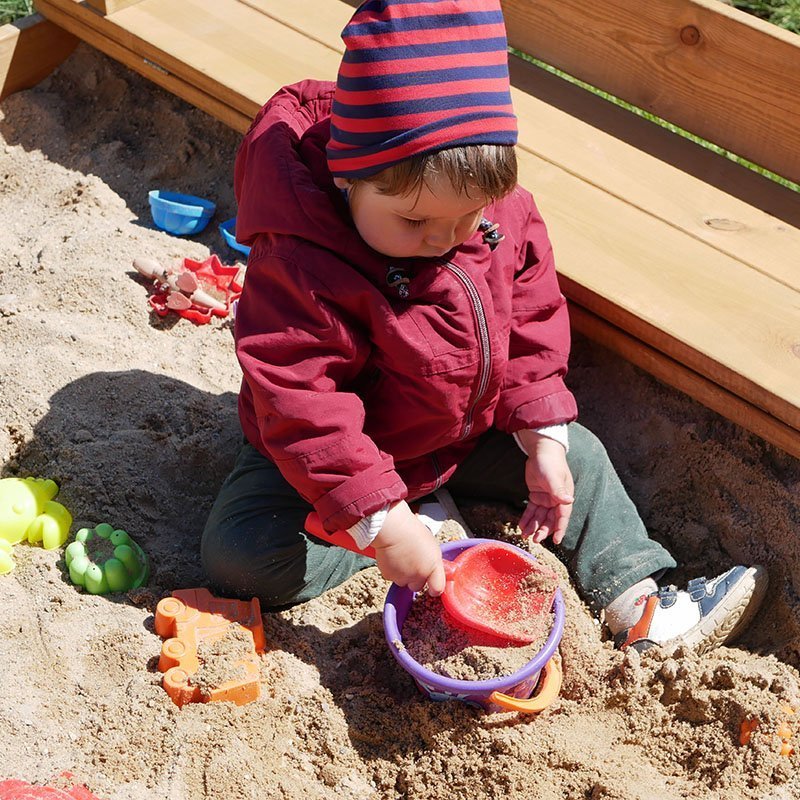
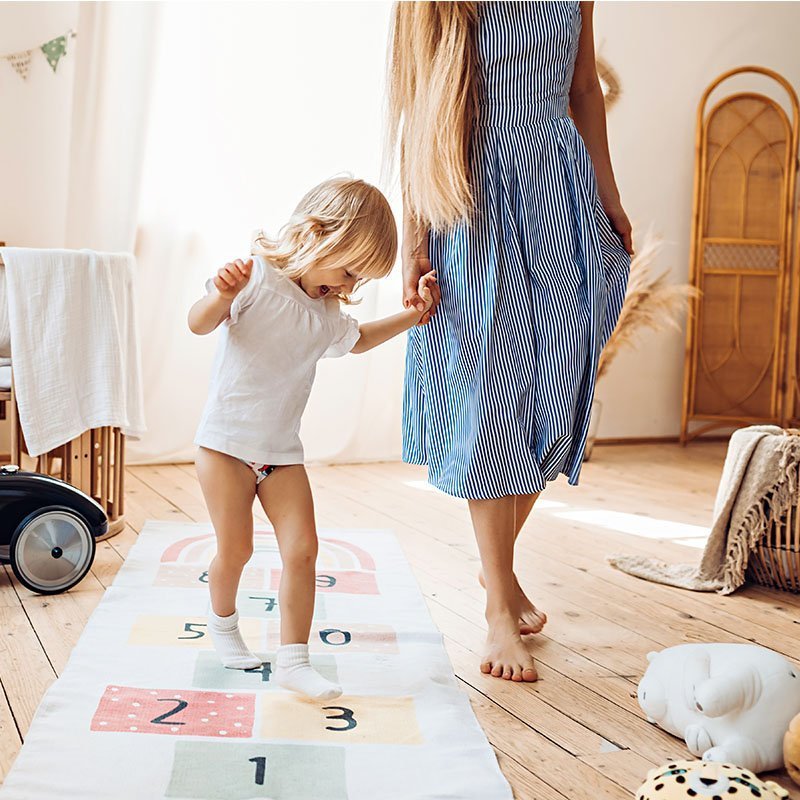
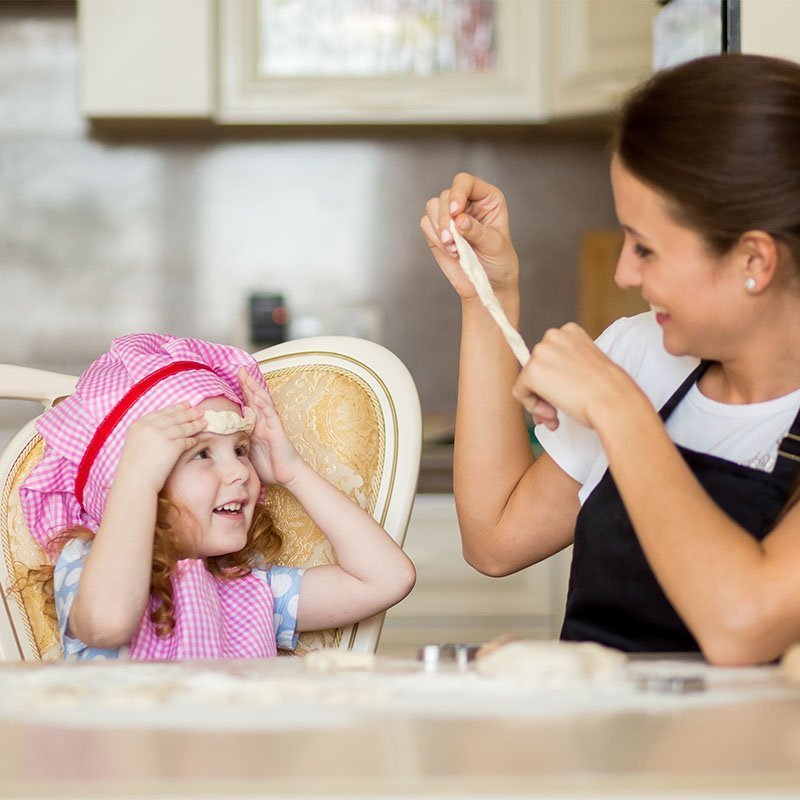
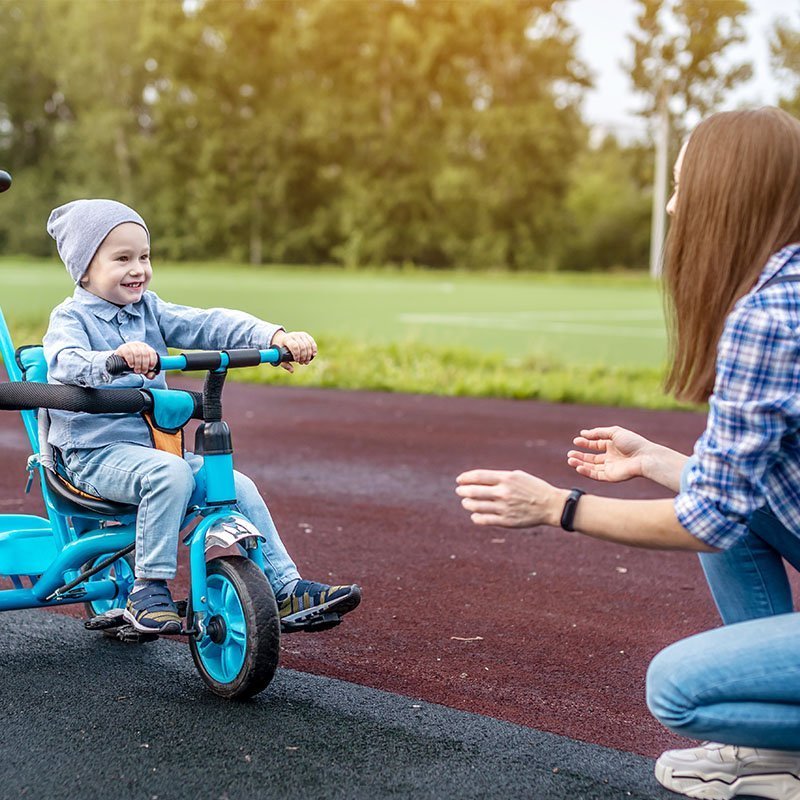
Even after a young child begins to talk, we will still need not only to listen to his burgeoning words, but also continue to attend to nonverbal cues to try to understand the child’s feelings and needs
Develop language through joint attention—that is, alerting a child to an object by means of eye gazing, pointing, or other verbal or nonverbal indications.
Eg: I know how much you enjoy eating bananas!” is the intentional responding process.
The CAIR approach can be implemented with reference to the following three key ideas based on early math concepts:
- Attributes are perceived through the senses.
- Attributes can be used to group or classify.
- Attributes can be described with increasing precision.
Eg: Latika purposefully arranged the environment by placing two distinctive types of toys to elicit exploratory behavior and stimulate mathematical experience from her toddler. Two of them are furry stuffed animals in bright colours while the other two are hard wooden animals in pastel shades. She then invites her 21-month-old daughter, Reva to play.
Reva first toddles towards the fury toys and starts caressing them. She then tries to squeeze their ears and hands while exploring them.
Next, she moves on to the wooden animals. She accidently drops one of the wooden animals, thereby making a bang sound. Latika closely attended to Reva’s exploration and gently bangs the two wooden animals thereby making sounds. Reva reaches out for the toys in her mother’s hand and attempts to make sound. Look at you making a sound just by shake-a-shake-shaking that block! intentionally responds to her mother. Reva smiles and squeals trying to bang them over and over again.
Reva then purposely dropped the furry animal but hears no sound. She tries again, but again no sound! She looks up to her mother and utters “no sound?” in a puzzled expression (social referencing)!
Latika responded by using gestures and soothing remarks to establish joint attention and then extended Reva’s learning by talking about grouping the blocks based on whether they make sound or not. Her use of language to describe the attributes of the block became more specific or precise as she and Reva separated the toys’ basis of sound. Similar exercise was done to classify objects based on remaining four senses of touch, sight, smell, taste